AI products · 01 of 07

Platzi Learn V1

Transforming enterprise documentation into engaging, structured learning experiences through AI-powered course generation.

CompanyPlatzi RoleSenior Product Manager ProductAI course generator · B2B
Impact

A new B2B revenue stream

Platzi Learn enabled companies to rapidly transform internal knowledge into professional learning experiences at scale.

50%Reduction in course production time
20+Documents processed simultaneously
10+Languages and narrator voices supported
NewB2B product line unlocking significant revenue potential
01 — Problem

The enterprise training challenge

Companies struggle to transform their internal knowledge into effective training programs. Documentation is scattered across formats, and creating structured educational content takes weeks of expert work.

AScattered contentDocumentation lives across PDFs, slides, videos and spreadsheets, with no educational structure or cohesive learning framework.
BTime-intensive processConverting technical documentation into effective courses requires weeks of work from instructional design experts.
CGeneric experiencesTraditional platforms offer one-size-fits-all solutions that don’t adapt to company context or employee knowledge levels.
02 — Solution

AI-powered course generation

AI workflows automatically turn company documentation into complete, structured courses with progressive modules, AI-narrated lessons and built-in assessments.

Automated course creationGenerates a complete syllabus with progressive modules, from basic to advanced, in a logical learning sequence.
AI narrationNatural-sounding audio lessons with a coherent narrative that follows project-based learning across the whole course.
Multi-format supportProcesses videos, PDFs, spreadsheets and documents, extracting and vectorizing content for course generation.
Intelligent personalizationAdapts content to audience and knowledge level, with multiple languages and customizable narrator voices.
Automatic summariesConcise lesson summaries for quick review and reference, reinforcing knowledge retention.
Best practices built inApplies Platzi’s 10+ years of educational expertise to drive learning outcomes and engagement.
03 — System architecture

Building for scale and reliability

We started with a simple microservice architecture using task queues. It worked, but struggled with reliability and visibility into the multi-stage generation process as document sets grew.

The breakthrough was reimagining the system around workflow orchestration instead of task processing — managing dependencies between steps, handling failures gracefully, and processing documents in parallel with a clear view of progress.


1 Document ingestion Users upload documentation and define course objectives in a simple form. PDFs, videos, presentations and spreadsheets are all accepted.
Course creation form
2 Parallel content extraction The orchestrator processes every document in parallel — extracting text, pulling audio from videos and building searchable indices. Parallelization dramatically cut processing time.
Course processing screen
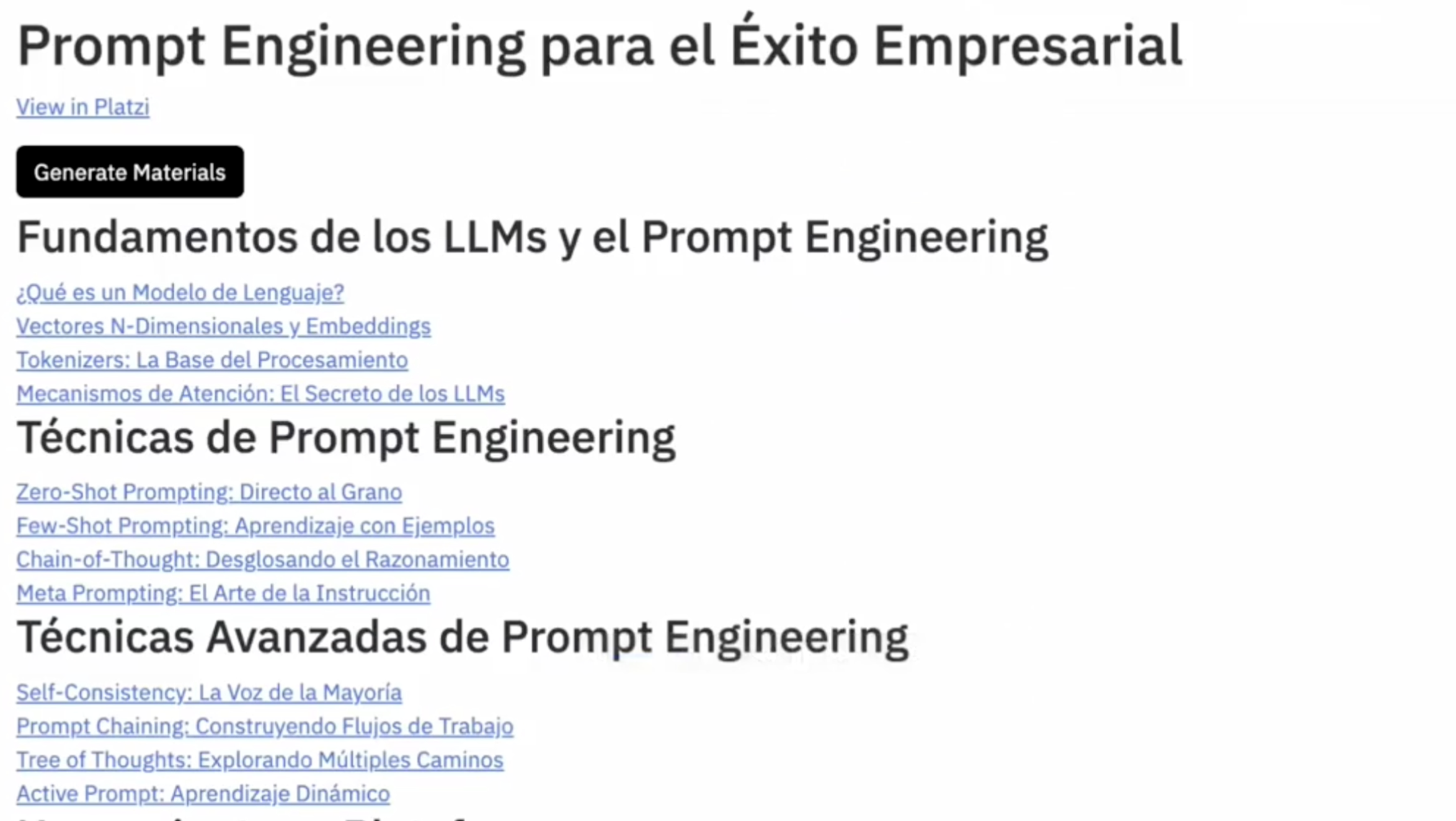
3 Intelligent course structuring Once content is indexed, the system synthesizes across documents into a coherent syllabus from foundational concepts to advanced applications.
Generated course syllabus
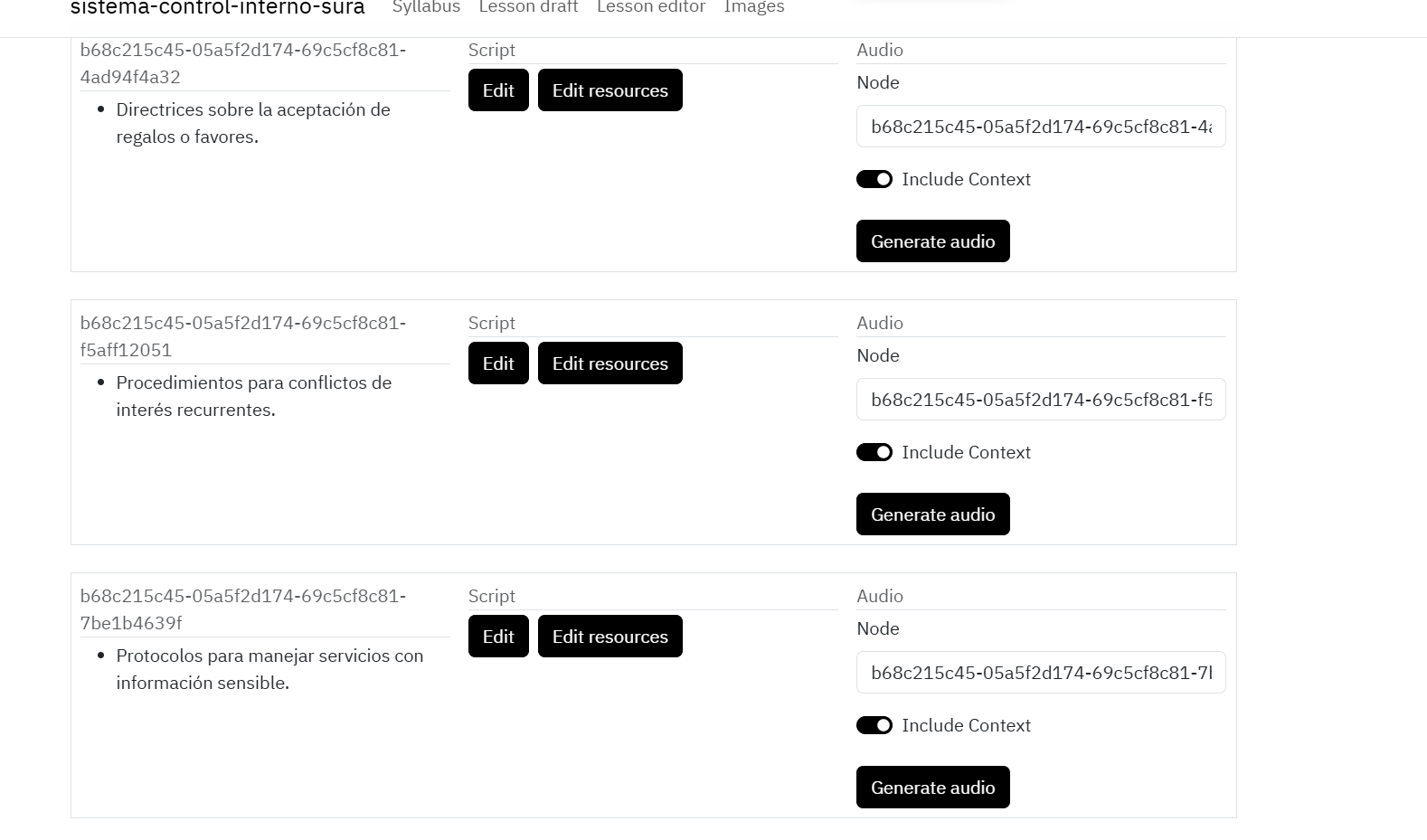
4 Lesson generation For each lesson, content, narrative scripts and audio are generated in parallel. Context from the overall course project keeps every lesson consistent.
Lesson scripts and audio generation
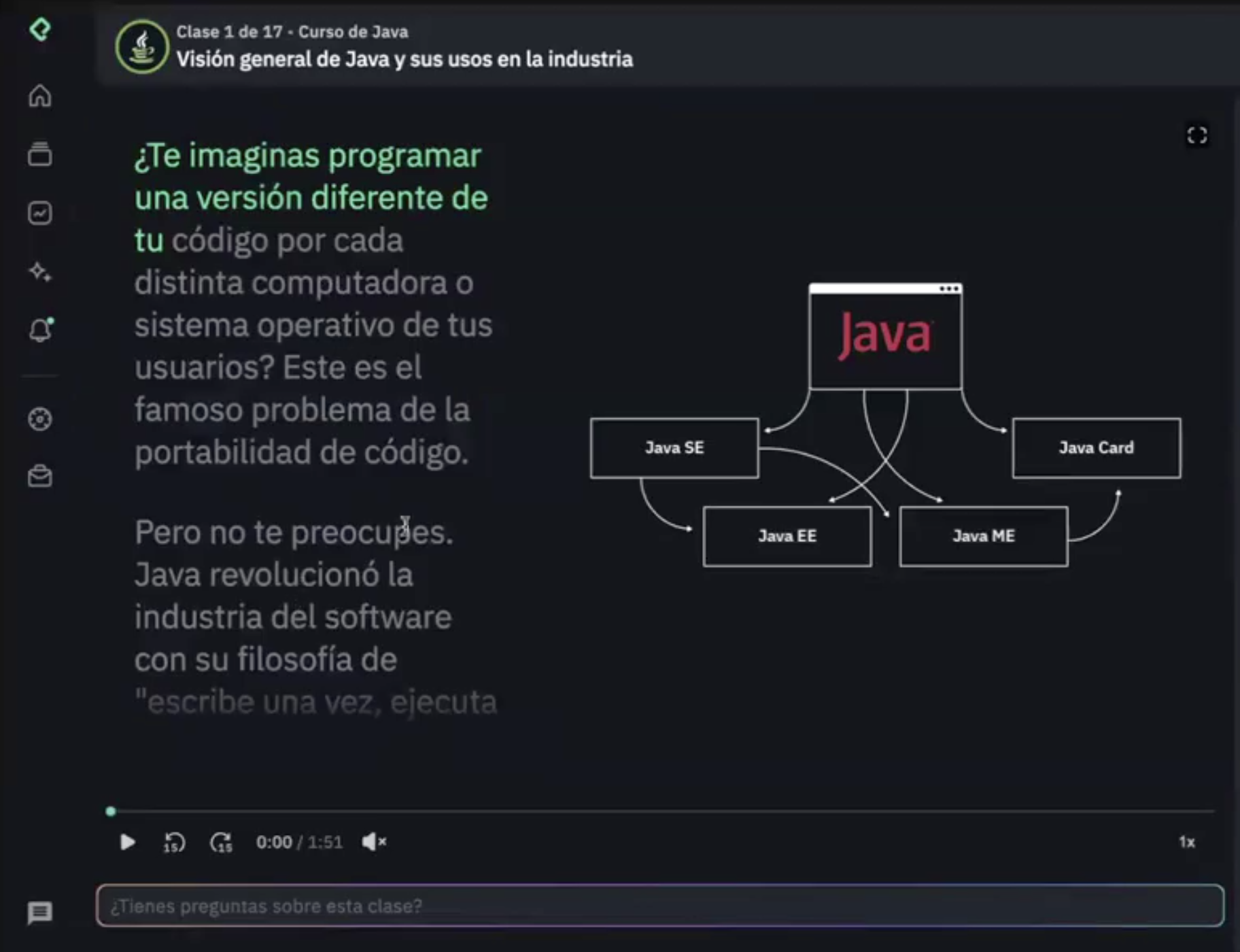
5 Assembly and publishing The orchestrator combines audio, scripts and metadata, then publishes a complete, ready-to-use course to the platform.
Published lesson in the learning player
04 — Key learnings

What I learned building this

01 Simplicity over complexity The first architecture was over-complicated with unnecessary frameworks. Simplifying to focused orchestration improved reliability without losing capabilities.
02 Ship now, perfect later Instead of waiting for the perfect solution, we focused on immediate value. That pragmatism unlocked revenue while the system kept evolving.
03 Iterate on real usage Our assumptions about how companies would use the system changed once we saw real patterns. Quick iteration was crucial to product-market fit.